
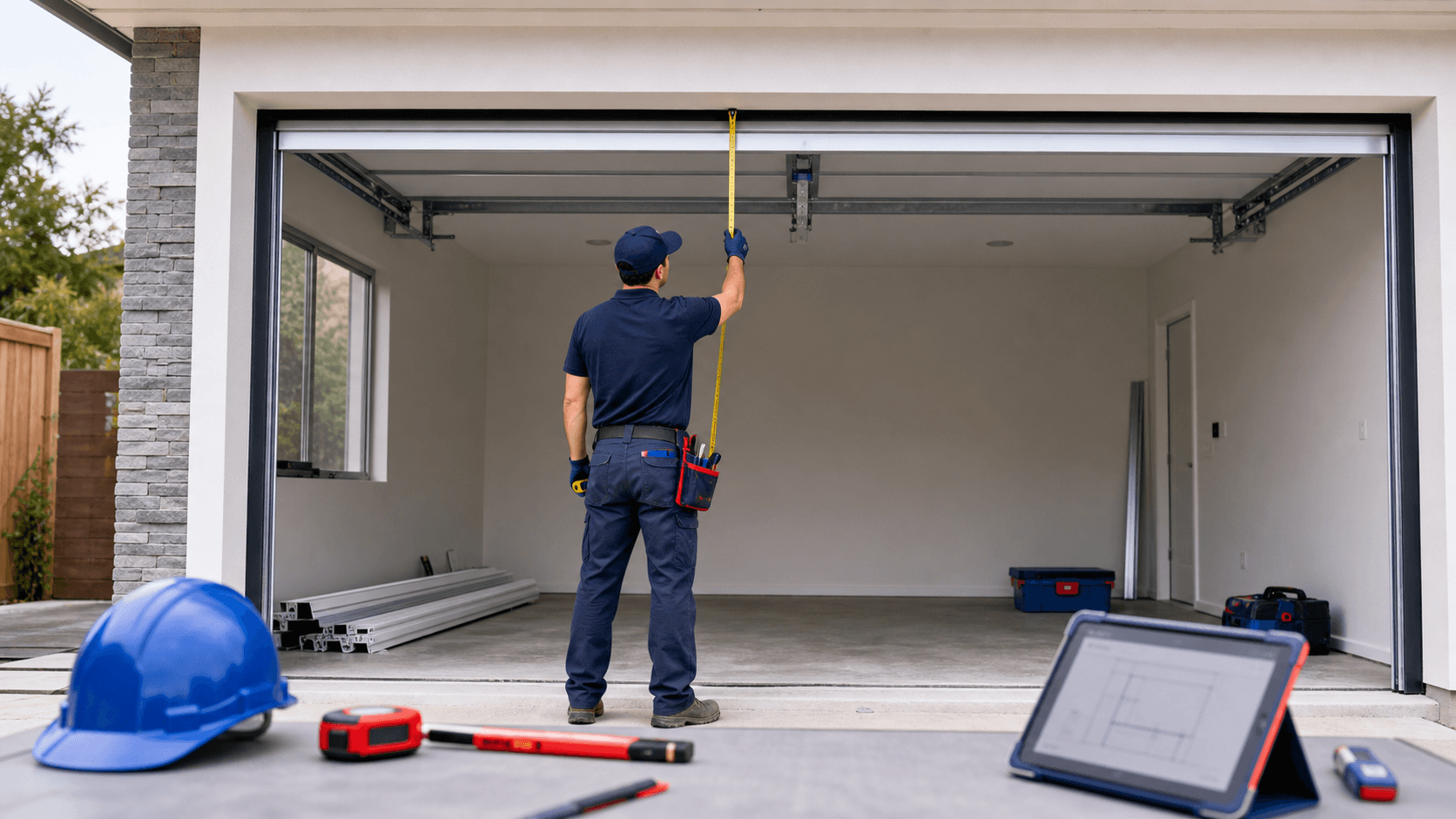
Standard garage door sizes are useful starting points, but they do not replace a proper opening review. A door that appears standard on paper can still require special hardware if the headroom, side room, backroom, floor level, or wall structure is unusual.
For overseas buyers, accurate measurement is especially important because the door may be produced in another country and shipped before the local installer sees every detail. A small missing measurement can cause delays, extra hardware changes, or installation difficulty.
This guide explains common residential garage door sizes and the measurements SEPPES usually asks for before reviewing a custom or standard quotation.
Common Residential Garage Door Sizes
In many markets, single-car garage doors are often around 8 to 10 feet wide, while two-car garage doors are often around 15 to 18 feet wide. Height is commonly around 7 to 8 feet for many residential applications, although villas, oversized garages, and project homes may require larger openings.
A 12x12 garage door is less typical for a standard home garage but can be used for oversized residential spaces, workshops, storage buildings, or special project applications. When a buyer asks for a 12x12 garage door, the supplier should review the door weight, panel structure, spring system, track layout, and motor needs carefully.
International buyers should remember that local size habits vary. A distributor in North America, a villa builder in the Middle East, and a renovation buyer in Australia may all define standard sizes differently. That is why size tables should be treated as reference points, not final specifications.
The Six Measurements Buyers Should Prepare
The basic measurement is opening width. Measure the clear distance from the left finished jamb to the right finished jamb. The second measurement is opening height, from the finished floor to the top of the opening. These two numbers define the visible opening.
The third measurement is headroom, which is the clear space above the opening. The fourth and fifth measurements are side room on the left and right sides. The sixth is backroom, which is the distance from the opening back into the garage ceiling area where the track and door panels will move.
For a smoother quotation, buyers should also provide photos of the opening, ceiling, side walls, and floor. If drawings are available, they should be sent together with the inquiry. These details help the factory and installer choose the correct hardware direction.
How Door Type Changes Measurement Review
Insulated steel sectional garage doors are usually flexible for common residential openings, but the panel weight still affects spring and motor selection. If the buyer adds windows or chooses a heavier panel specification, hardware review remains important.
Full-view aluminum glass doors require careful measurement because glass panels can be heavier and the frame layout must be stable. Privacy glass, insulated glass, or larger panel sizes may change the door weight and hardware requirement.
Custom aluminum garage doors often connect more closely to the building facade. In these projects, measurement is not only about the opening. The buyer may also need to provide facade elevation, panel rhythm, cladding direction, color references, and alignment with nearby windows or walls.
Installation Preparation Before Ordering
Before placing an order, confirm whether the opening is finished or still under construction. If the garage is unfinished, ask whether the final floor level, wall finish, and ceiling finish will change. Production based on temporary measurements can create problems later.
Check whether there is enough room for the track, spring shaft, motor, and manual release. Also check whether the wall structure can support brackets and whether electrical power will be available near the motor position.
For project buyers ordering multiple doors, create an opening schedule. List each door number, width, height, door type, color, glass option, motor requirement, and installation note. This helps avoid confusion when several similar but not identical doors are ordered together.
When to Choose Custom Size Instead of Standard Size
Custom size is useful when the building design, facade proportion, vehicle type, or local installation condition does not match a standard door. It is also common in premium villas where the garage door must align with architecture rather than force the architecture to fit a stock size.
A custom size does not automatically mean the project is complicated. It simply means the supplier should confirm panel layout, track space, hardware, and packing more carefully. For B2B buyers, custom size review is normal and can be handled efficiently when the right information is provided.
Preguntas Frecuentes
What is a standard two-car garage door size?
Common two-car garage doors are often around 15 to 18 feet wide, but standards vary by country and project type. Always confirm the actual opening width, height, headroom, side room, and backroom before ordering.
Do they make 12 foot garage doors?
Yes. A 12 foot wide or 12x12 garage door can be produced for suitable applications, but the hardware and motor should be reviewed based on the full opening condition and door weight.
What measurements are needed for a garage door quote?
Prepare opening width, opening height, headroom, left side room, right side room, backroom depth, photos, and drawings if available.
Can I order a garage door before the opening is finished?
It is possible, but final dimensions should be confirmed before production. Changes in floor level, wall finish, or ceiling structure can affect installation.